Rights and Daily Life
Housing Rights and Help for People With Disabilities
What Housing Rights and Help Do People With Disabilities Have?
Disability housing assistance comes in two parts: rights and rent help. The Fair Housing Act bars disability discrimination in nearly all housing and requires landlords to allow reasonable accommodations in their rules and reasonable modifications to your home. For rent help, HUD funds Housing Choice Vouchers (Section 8), public housing and Mainstream vouchers for non-elderly people with disabilities, all applied for through your local public housing agency. If your rights are violated, you can report it to HUD within one year.
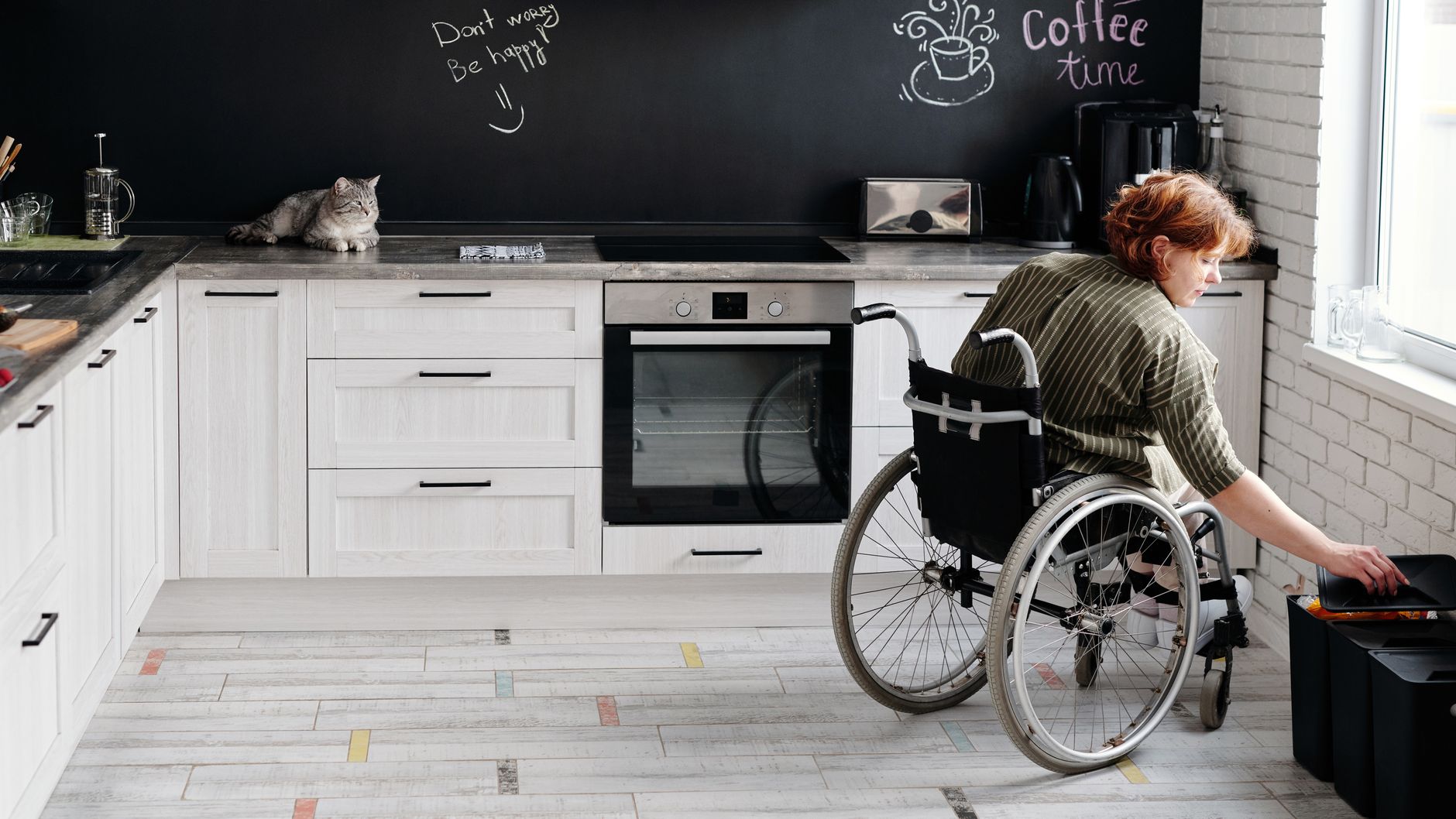
Your Housing Rights Under the Fair Housing Act
The Fair Housing Act is the main federal law protecting people with disabilities in housing. The Justice Department says it prohibits disability discrimination in all types of housing transactions: renting, buying, getting a mortgage or homeowners insurance, and dealing with landlords, real estate agents, homeowners associations and local governments.
Who is protected. The law covers anyone with a physical or mental impairment that substantially limits one or more major life activities, such as seeing, hearing, walking, breathing, learning or caring for yourself. It also protects people with a record of such an impairment, and people treated as if they have one. Mental health conditions, learning disabilities and HIV are included.
What’s illegal. A housing provider can’t refuse to rent or sell to you, set different terms, or steer you to certain units because of your disability. Local governments can’t use zoning rules to keep out group homes for people with disabilities.
The limits. Someone currently using illegal drugs isn’t protected by virtue of that status. A provider may refuse someone who poses a direct threat to others or their property, but only after an individual assessment, not based on assumptions about a condition.
The Fair Housing Act sits alongside other disability laws. The ADA covers public housing programs run by state and local governments, and Section 504 covers housing that gets federal money.
Reasonable Accommodations: Changing the Rules
A reasonable accommodation is a change to a rule, policy, practice or service that you need because of your disability. HUD’s fair housing rule makes it illegal to refuse one when it’s needed to give you an equal chance to use and enjoy your home, including shared areas like the lobby, laundry room or parking lot.
HUD’s own examples show how this works:
- A building has a no-pets policy. A blind applicant who uses a guide dog must be allowed to live there with the dog.
- An apartment complex assigns parking first come, first served. A tenant who can walk only short distances asks for a reserved space near the unit. Refusing is a violation.
Put your request in writing and keep a copy. Not every requested change is reasonable: the Justice Department notes that what counts as a reasonable accommodation is decided case by case.
Reasonable Modifications: Changing Your Home
A reasonable modification is a physical change to your unit or the building, such as grab bars, a ramp, a roll-in shower or lever door handles.
In private housing, you usually pay. Under the Fair Housing Act, a landlord must let you make reasonable modifications you need, at your own expense. In return, the landlord may:
- ask for a reasonable description of the work, and assurance that it will be done properly with any required permits;
- for changes inside a rental, ask you to restore the unit when you move out, except for normal wear and tear;
- negotiate payments into an interest-bearing escrow account to cover restoration, with the interest going to you.
The landlord can’t raise your security deposit because of your disability.
In federally assisted housing, Section 504 adds duties. Housing that receives HUD money must change its policies and practices so they don’t discriminate, and it can’t ban things like assistive devices, auxiliary alarms or guides. New HUD-assisted multifamily projects must make at least 5% of units (or one unit, whichever is greater) accessible for people with mobility impairments, and another 2% for people with hearing or vision impairments. Ask the housing agency or manager about accessible units and how they handle modification requests.
Accessible Design in Newer Buildings
Many apartment buildings must be built with access in mind. The Fair Housing Act’s design rules apply to covered multifamily buildings first occupied after March 13, 1991. “Covered” means buildings with 4 or more units that have an elevator, and the ground-floor units in other buildings with 4 or more units.
These buildings must have at least one entrance on an accessible route, unless the terrain or the site makes that impractical. If a newer building you live in or want to rent doesn’t meet the design rules, that can be a fair housing violation you can report.
| Your situation | Main law | Who usually pays for physical changes |
|---|---|---|
| Private rental or home purchase | Fair Housing Act | You, with the landlord’s permission |
| HUD-assisted housing (public housing, project-based) | Fair Housing Act and Section 504 | Ask the housing provider; Section 504 requires policy changes and accessible units |
| Public housing authority programs | Fair Housing Act, Section 504 and ADA Title II | Ask the housing authority |
| Newer multifamily building (after March 13, 1991) | Fair Housing Act design rules | The builder must meet the access rules |
Assistance Animals in Housing
Animals are one of the most common accommodation requests. The Justice Department explains that under the Fair Housing Act, housing providers must permit, as a reasonable accommodation, animals that work, provide assistance or perform tasks for a person with a disability, or that provide emotional support to ease a symptom or effect of a disability.
That’s broader than the ADA. Under the ADA, which governs places like stores and restaurants, a service animal is a dog individually trained to do work or perform tasks for a person with a disability, and emotional support animals don’t qualify. In housing, the Fair Housing Act reaches further, so a no-pets rule doesn’t end the conversation: HUD’s own rule uses a guide dog in a no-pets building as its first example of a required accommodation.
Make your request in writing and keep copies of everything you send and receive. If you’re turned down, you can report it to HUD.
How to File a Housing Discrimination Complaint With HUD
HUD’s Office of Fair Housing and Equal Opportunity (FHEO) takes complaints. Under the Fair Housing Act, you must file within one year of the last date of the discrimination, so act quickly.
You can report:
- Online through HUD’s housing discrimination form;
- By phone at 1-800-669-9777, which also takes relay calls; or
- By mail to your regional FHEO office.
Have ready your name and address, the name and address of the landlord or organization, the address of the housing, a short description of what happened, and the dates.
What happens next. FHEO either investigates your complaint or refers it to a state or local fair housing agency that enforces an equivalent law. If HUD finds reasonable cause to believe discrimination happened, it issues a charge. Either side then has 20 days to choose a trial in federal court; otherwise a HUD administrative law judge hears the case. Complaints about Section 504 in HUD-funded housing follow a separate review process.
You can also file your own lawsuit in federal or state court. It’s illegal for anyone to retaliate against you for filing a complaint or helping with one.
Federal Disability Housing Assistance: Vouchers and Public Housing
HUD doesn’t rent apartments directly. It funds local public housing agencies (PHAs) that run the programs, so your local PHA is where you apply.
| Program | Who it serves | How to apply |
|---|---|---|
| Housing Choice Voucher (Section 8) | Low-income families, elderly people, veterans and people with disabilities renting in the private market | Your local PHA’s waiting list |
| Mainstream vouchers | Non-elderly people with disabilities; same rules as regular vouchers | Your local PHA, if it has Mainstream vouchers |
| Public housing | Low-income families, elderly people and people with disabilities | Your local housing agency, in writing |
| Section 811 supportive housing | Very low-income people with disabilities | Your local HUD Multifamily office |
Housing Choice Vouchers. About 2,000 PHAs run the voucher program. Your eligibility depends on your income and family size; generally your household must be extremely low-income or very low-income for your area. You’ll usually pay about 30% of your adjusted monthly income toward rent, though it can be as high as 40%, and the PHA pays the rest of the approved rent to the landlord. Waiting lists are long, so HUD suggests applying to more than one. PHAs can give preference to applicants with disabilities, which can move you up the list. Once you get a voucher, you have at least 60 days to find a unit, and the unit must pass inspection.
Mainstream vouchers. These vouchers are set aside for non-elderly people with disabilities. Since 2018, HUD has funded 50,000 new Mainstream vouchers through PHAs. Ask your PHA whether it has them.
Public housing. About 3,300 housing agencies manage public housing. HUD’s income limits are 80% of area median income for low-income households and 50% for very low-income households. If the agency finds you ineligible, it must tell you why, and you can ask for an informal hearing.
When you apply, include your SSI or other benefit paperwork, proof of income and Social Security cards. If you need a change in how the PHA handles your application because of your disability, you can ask for a reasonable accommodation. Veterans can also look at VA disability compensation, and SSI recipients should report any move or rent change, since SSI payments depend on living arrangements.
Where to Get Help in Your State
Your state’s protection and advocacy agency. Every state has a protection and advocacy (P&A) agency for people with disabilities. ACL says there are 57 P&As in the U.S. and its territories, and they provide legal support to people with disabilities, including people who are traditionally underserved. Each state page names your P&A: for example, Disability Rights California on the California page and Disability Rights Texas on the Texas page.
State and local fair housing agencies. Many states and cities enforce their own fair housing laws, and HUD may refer your complaint to them. Some local laws also protect voucher holders from being turned away.
Related help on this site:
- Medicaid for people with disabilities, including home and community-based services that can help you stay in your own home
- ABLE accounts, which can pay housing costs without counting against SSI
- Paid family caregivers, if a relative helps you live at home
- Disability parking placards, for accessible parking near your building
- Workplace accommodations, for the same kind of request at work
Frequently Asked Questions
Can a Landlord Charge Me a Higher Deposit Because of My Disability?
Not for a modification. HUD's fair housing rule says a landlord may not raise the usual security deposit for a tenant with a disability. When a modification will need undoing later, the landlord may instead negotiate payments into an interest-bearing escrow account, up to the cost of restoring the unit, with the interest going to you.
Does the ADA Cover My Apartment?
Sometimes. The Justice Department says the ADA applies to housing programs run by state and local governments, such as public housing authorities, and by places of public accommodation such as universities. The Fair Housing Act covers virtually all housing, public and private. See your rights under the ADA.
Can a Landlord Refuse Me for Having a Mental Health Condition?
No. The Fair Housing Act's definition of disability includes mental as well as physical impairments that substantially limit a major life activity, and it also protects people with a record of such an impairment or who are regarded as having one. A landlord can refuse only on an individual finding that a person is a direct threat, not on assumptions about a condition.
Can I Apply to More Than One Housing Agency?
Yes. HUD says that because of high demand and long waiting lists, you may need to apply to several public housing agency waiting lists, and you don't have to live in an agency's area to apply. An agency may require you to live in its area for the first 12 months of assistance.
What if My Voucher Is About to Expire Before I Find a Place?
Contact your housing agency and ask for an extension. HUD says you have at least 60 days to search after you receive a voucher, and agencies set search times of 60 to 120 days.
Is It Legal for a Landlord to Retaliate if I File a Complaint?
No. HUD says it's illegal to retaliate against anyone for filing a complaint, testifying or helping in a HUD proceeding, or for reporting discrimination to a housing provider. You can report retaliation to HUD too.
More on Rights and Daily Life
- ADA RightsWhat the ADA covers and how to file a complaint
- Workplace AccommodationsReasonable accommodations at work: asking, the interactive process and examples
- What Is an IEPIndividualized education programs under IDEA: eligibility, evaluation, the team and your rights
- What Is a 504 PlanSection 504 plans: who qualifies, typical accommodations and how to request one
- IEP vs 504IEPs and 504 plans side by side: laws, eligibility, services and protections
- Parking PlacardsDisability parking placards and plates: who qualifies and each state's application
This guide explains official rules in plain language. It isn't legal advice, and only the agency that runs a program can decide your case.
Sources
- HUD: Report housing discrimination
- HUD: FHEO intake and investigation process
- Justice Department: The Fair Housing Act
- eCFR: 24 CFR Part 100, Subpart D (disability)
- eCFR: 24 CFR Part 8 (Section 504 in HUD programs)
- ADA.gov: Frequently asked questions about service animals
- HUD: Housing Choice Voucher applicant and tenant resources
- HUD: Public housing program
- HUD: Mainstream vouchers
- HUD: Section 811 supportive housing
- ACL: State protection and advocacy systems